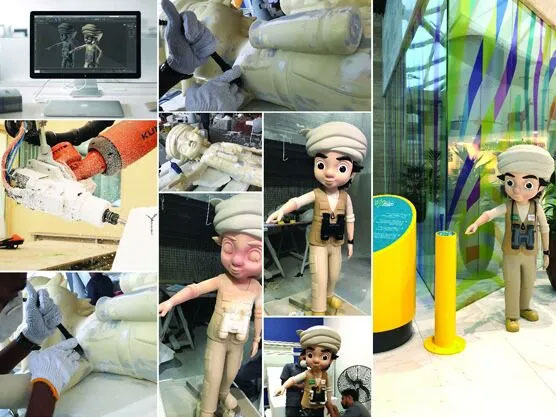
Artists often look at a finished sculpture and marvel at its smooth curves and sharp edges. However, the true magic happens long before the final coat of paint dries. The secret lies in a hidden shell that shapes every detail with perfect accuracy.
This vital tool, called a mould, acts as the soul of the creation process, turning a soft clay idea into a solid reality. These masters of shape are essential for creating bespoke fibreglass art installations.
The birth of the shape:
Every great piece begins with a master model. This original version is used to form the hollow space that will hold the liquid material. If the master model has even a tiny scratch, the shell will catch it. This stage requires a lot of patience because the shape must be perfect to ensure the final art looks exactly like the artist intended.
Choosing the right materials:
Building a strong shell is about picking the right stuff. Some are made from flexible rubber while others are made from hard resins. The choice depends on how complex the art is. A flexible one is great for pieces with lots of tiny details or deep curves because it can peel away without breaking the art inside.
Layers of strength:
Creating the shell is not a one-step job. It involves putting down many layers to ensure it stays stiff and holds its form. If the shell is too thin, it might bend under the weight of the wet material. Makers add thick ribs or frames to the outside to keep everything straight. This strength ensures that the hundredth piece looks just as good as the first one.
The art of the release:
One of the trickiest parts is ensuring the art comes out easily. A special wax or liquid is spread inside the shell before the work starts. This creates a tiny gap so the fibreglass does not stick to the walls. Without this step, the art and the shell would bond together forever, ruining hours of hard work in a single second.
Capturing every tiny detail:
The inner surface of the shell is where the texture lives. It can be as smooth as glass or as rough as stone. When the material is pressed inside, it takes on every bump and line. This high level of detail is why people love this medium.

